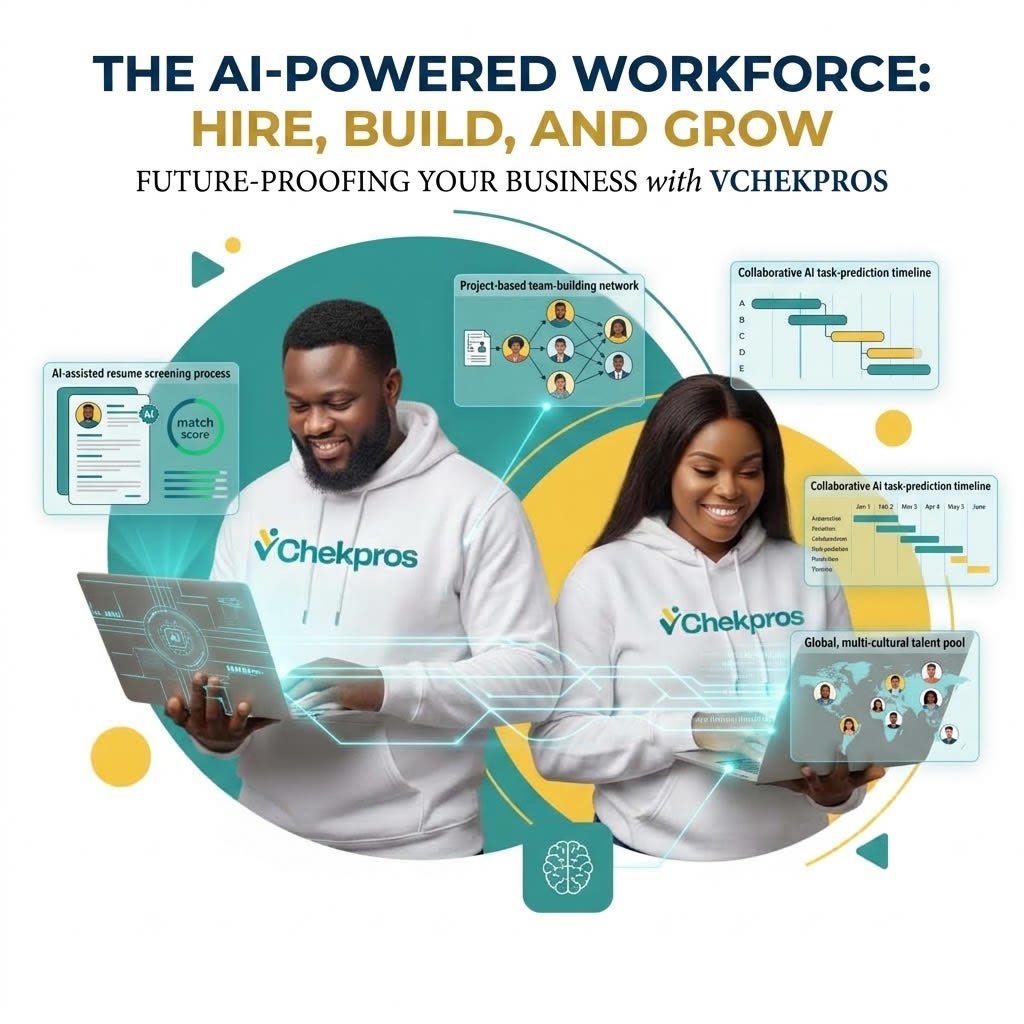
The traditional workplace is changing. Discover how AI, freelancers, remote professionals, automation and global talent are creating a new model for hiring and building high-performing teams.
The traditional company had a simple structure.
Hire employees.
Build departments.
Create offices.
Assign responsibilities.
Repeat.
But the economics of modern business are changing.
A company can now operate with a small core team while accessing specialized professionals around the world.
Artificial intelligence can automate repetitive processes.
Freelancers can provide specialized expertise.
Remote professionals can collaborate across borders.
AI agents can assist with workflows.
Automation can connect systems that once required manual intervention.
And digital talent marketplaces can connect businesses with professionals based on skills rather than geography.
This creates a new question for business leaders:
What will the workforce of the future actually look like?
The answer is already emerging.
The future workforce will likely be more flexible, more specialized, more technology-enabled and more global.
And businesses that understand this transformation early may have a major advantage.
The Traditional Workforce Model Is Changing
For much of modern business history, companies hired people into permanent roles.
A company might employ:
- Accountants
- Designers
- Developers
- Marketing specialists
- Customer support teams
- Human resources professionals
- Administrative staff
- Project managers
But not every company needs every skill at full capacity all year.
A startup may need a product designer for three months.
An e-commerce company may need a developer for a major platform upgrade.
A growing business may need an SEO specialist for a six-month growth campaign.
A company launching internationally may need translators, researchers and localization experts.
Hiring every specialist permanently may not make economic sense.
This is one reason flexible talent is becoming increasingly important.
Upwork’s 2026 research found that 77% of business leaders surveyed said AI was increasing their need for fractional talent with specialized skills.
The implication is significant.
Businesses may increasingly build teams around capabilities rather than headcount.
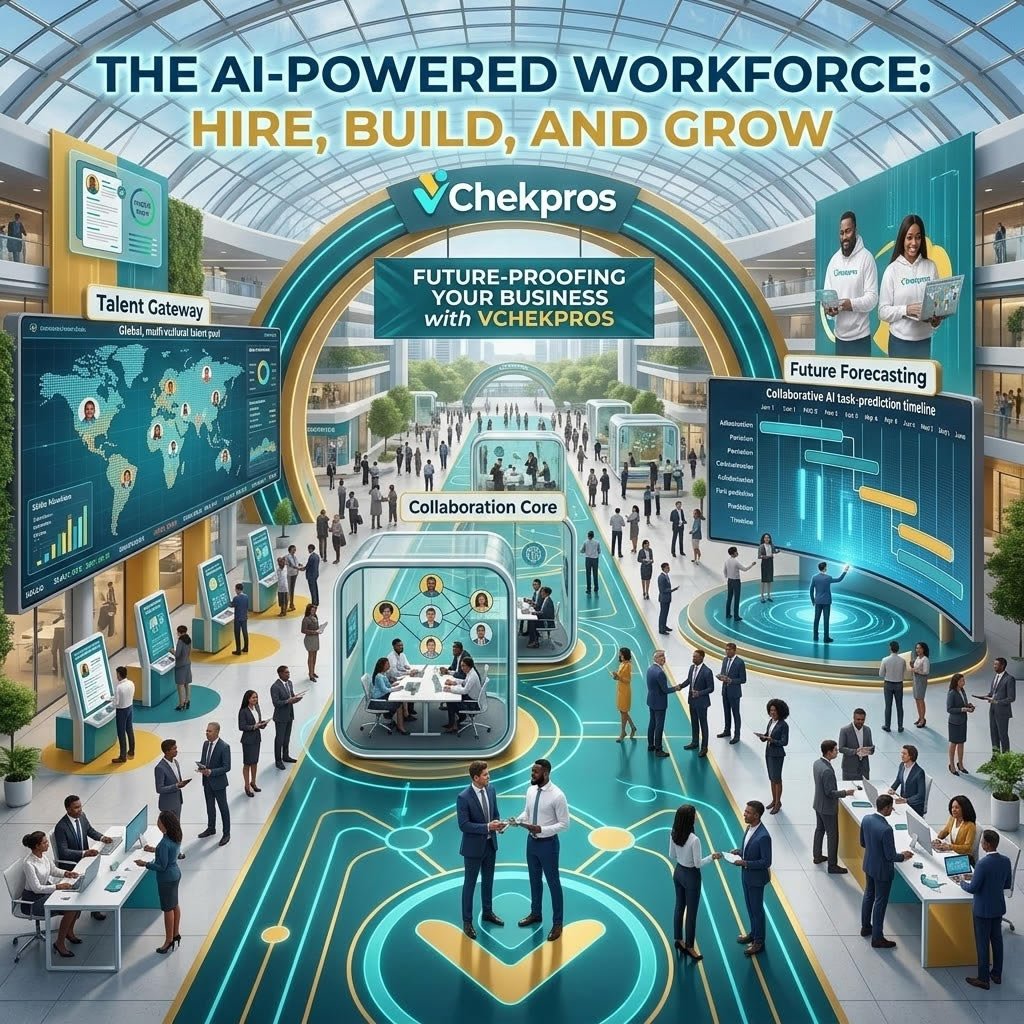
The Company of the Future May Be Smaller—and More Powerful
Imagine a company with 25 full-time employees.
Instead of trying to employ 100 additional specialists, the company maintains a flexible network of trusted professionals.
When the company needs:
A developer → it brings in a developer.
A branding expert → it brings in a branding expert.
An AI consultant → it brings in an AI consultant.
A cybersecurity specialist → it brings in a cybersecurity specialist.
A video production team → it brings in specialized creative professionals.
The result is a workforce that can expand and contract according to business requirements.
This is sometimes described as a fractional, distributed or blended workforce.
It doesn’t mean permanent employees disappear.
It means companies combine different types of talent.
AI Is Becoming Part of the Workforce
Artificial intelligence is also changing what a team can accomplish.
A marketing department can use AI for research and campaign ideation.
A software team can use AI-assisted development tools.
Customer-service teams can use AI to handle routine inquiries.
Finance teams can automate parts of reporting and analysis.
Human resources teams can use AI to assist with administrative workflows.
Sales teams can use AI for research and personalization.
But there is a critical distinction:
AI is a capability—not an entire workforce strategy.
Simply buying AI software does not automatically make a company more productive.
The company needs people who know how to implement the technology properly.
The New Competitive Advantage: AI + Human Expertise
The most successful businesses may not be those with the most AI tools.
They may be those that know how to combine AI with the right people.
Consider a business implementing an AI customer-support system.
The technology may be impressive.
But someone still needs to:
- Define the customer experience
- Configure workflows
- Train the system
- Integrate company data
- Monitor performance
- Identify errors
- Improve responses
- Protect sensitive information
- Measure customer satisfaction
That requires human expertise.
This is why AI is creating demand for professionals who can integrate technology into real business processes.
What Businesses Will Hire for in the AI Era
The hiring market is evolving.
Businesses will increasingly look for people who combine traditional expertise with technology.
Some emerging combinations include:
Marketing + AI
Professionals who understand marketing strategy and can use AI to accelerate research, content creation, personalization and campaign analysis.
Development + AI
Developers who can build applications while using AI-assisted development, automation and intelligent systems.
Design + AI
Designers who combine creative judgment with AI-enabled visual production.
Data + AI
Analysts who can use AI to process information while maintaining rigorous human oversight.
Operations + AI
Professionals who can identify inefficient workflows and automate them.
Sales + AI
Sales professionals who use AI for prospect research, personalization and pipeline intelligence.
Project Management + AI
Project managers who use AI to improve planning, reporting, documentation and team coordination.
The common thread is clear:
Technical capability becomes more powerful when combined with business expertise.
The Resume May Become Less Important Than the Proof
For decades, businesses relied heavily on resumes.
A resume can tell you:
Where someone worked.
What they studied.
How many years they have been employed.
But it may not tell you whether they can actually solve your problem.
Digital marketplaces make another form of evaluation possible.
Businesses can examine:
- Portfolios
- Previous projects
- Client feedback
- Skills
- Specializations
- Professional profiles
- Work samples
- Project proposals
This moves hiring toward something more important:
evidence of capability.
The question becomes:
“Can this person deliver the outcome we need?”
Why Skills-Based Hiring Is Becoming More Important
Traditional hiring often starts with a job title.
Modern hiring increasingly starts with a problem.
Instead of:
We need a marketing manager.
A company might say:
We need to increase qualified leads from organic search.
Instead of:
We need a developer.
The company might say:
We need to build a scalable customer portal.
Instead of:
We need a designer.
The company might say:
We need a complete visual identity for our international product launch.
This is outcome-based hiring.
It changes how companies find talent.
The Global Talent Pool Is Becoming Accessible
One of the biggest advantages of online work is geography.
Businesses are no longer limited to professionals who live nearby.
A company in the United States can work with a developer in Nigeria.
A European startup can work with a designer in Kenya.
An Australian company can collaborate with a marketing specialist in India.
A Canadian business can work with a consultant in South Africa.
The ability to access global expertise creates opportunities on both sides.
For businesses:
More talent.
For professionals:
More opportunities.
For marketplaces:
Better connections.
Why Africa Matters in the Future of Global Work
Africa has one of the world’s fastest-growing and youngest populations.
That creates an enormous potential talent pool.
As digital connectivity improves and businesses increasingly adopt remote and distributed work, African professionals can participate in global markets without relocating.
For professionals across Nigeria, Ghana, Kenya, South Africa, Egypt and other African markets, the opportunity is significant.
A skilled professional does not necessarily need to move to another country to access international work.
The internet can become the bridge.
This creates an important opportunity for African professionals to compete globally based on expertise, professionalism and results.
The New Hiring Question
For decades, companies asked:
“Where can we find employees?”
The future may ask:
“Where can we find the expertise we need?”
That’s a major difference.
Expertise may come from:
- Employees
- Freelancers
- Consultants
- Agencies
- Independent specialists
- Remote professionals
- AI systems
- Automation
- Strategic partners
The best workforce model may combine all of them.
How Businesses Should Build an AI-Ready Workforce
Companies preparing for the future should consider five principles.
1. Audit Your Workflows
Identify repetitive tasks.
Which activities consume employee time without requiring significant judgment?
These may be candidates for automation or AI assistance.
2. Identify Human-Critical Work
Determine where human judgment remains essential.
These areas should receive investment rather than blind automation.
3. Build AI Literacy
Employees don’t necessarily need to become AI engineers.
But they should understand:
- What AI can do
- What it cannot do
- How to use it safely
- How to verify outputs
- How to protect sensitive information
- How to integrate AI into workflows
4. Access Specialized Talent
Don’t expect your existing employees to become experts in everything.
Sometimes the fastest route is to hire a specialist.
An AI implementation expert can help.
A cybersecurity consultant can help.
A data specialist can help.
A professional marketplace can make finding those specialists easier.
5. Measure Outcomes
AI adoption should ultimately produce measurable improvements.
Ask:
Did productivity increase?
Did costs decrease?
Did quality improve?
Did customers become more satisfied?
Did revenue increase?
Technology should serve business objectives.
The Future Worker May Have an AI “Team”
Imagine a professional in the near future beginning their workday with a collection of intelligent tools.
One AI assists with research.
Another analyzes data.
Another helps create content.
Another monitors workflows.
Another summarizes meetings.
Another identifies potential problems.
The human professional coordinates the system.
This is fundamentally different from traditional employment.
Instead of one worker performing every task manually, the worker becomes the manager of a network of digital capabilities.
The human remains responsible for:
Direction.
Judgment.
Creativity.
Accountability.
Relationships.
Decision-making.
Human Oversight Will Become More Important
As AI becomes more capable, businesses cannot simply assume that AI output is correct.
AI can make mistakes.
It can misunderstand context.
It can produce inaccurate information.
It can introduce bias.
It can expose sensitive information if poorly managed.
Human oversight therefore becomes essential.
The World Economic Forum has highlighted the importance of human roles focused on defining problems, setting constraints, evaluating outcomes and making final decisions when AI is involved.
The future of work therefore requires not less responsibility from humans—but potentially different responsibility.
The Freelancer Becomes Part of the Business Ecosystem
Freelancers should not be viewed simply as temporary workers.
A highly skilled independent professional can become an important extension of a company’s capabilities.
A business may maintain a core internal team while building relationships with trusted external specialists.
Over time, these professionals can become part of the company’s broader ecosystem.
This can provide:
- Specialized expertise
- Faster execution
- Flexible capacity
- Access to global talent
- Reduced hiring friction
- Support during periods of rapid growth
The challenge is finding the right professionals.
That’s where marketplaces become important.
Building a Better Global Talent Marketplace
The future of work needs more than a list of profiles.
Businesses need confidence.
Professionals need opportunities.
Both sides need transparency.
A modern talent marketplace should make it easier to:
Discover talent.
Understand capabilities.
Evaluate expertise.
Communicate requirements.
Manage projects.
Build trust.
Complete work.
Create long-term professional relationships.
That is the opportunity Chekpros is built around.
Chekpros and the Future of Work
Chekpros is designed to connect businesses and professionals in a marketplace built for the changing world of work.
For businesses, the platform can provide a place to discover professionals across a wide range of skills and project requirements.
For freelancers and independent professionals, it can provide a place to showcase expertise and discover new opportunities.
The larger vision is simple:
Make it easier for businesses to find the right skills and for professionals to find the right opportunities.
As work becomes increasingly global, flexible and technology-enabled, those connections become more important.
The Future Company Will Be Built Around Capability
The company of the future may not be defined by the number of people sitting inside its offices.
It may be defined by what its extended workforce can accomplish.
A small company with exceptional employees, specialized freelancers, intelligent software and efficient workflows can potentially compete with organizations many times its size.
That changes entrepreneurship.
It changes hiring.
It changes careers.
And it changes the definition of a team.
The Future of Work Has Already Started
AI is not a distant technology waiting to arrive.
It is already changing how people research, write, design, code, analyze, communicate and operate businesses.
Freelancing is expanding.
Remote work is evolving.
Skills are becoming more important than geography.
Businesses are building increasingly flexible teams.
And professionals are learning to combine human expertise with artificial intelligence.
The organizations that adapt will have an advantage.
The professionals who continue learning will have an advantage.
The marketplaces that help connect these two groups will become increasingly important.
Build Your Future Workforce Today
You don’t have to wait for the future.
If you’re a business, start identifying the skills your organization needs to grow.
If you’re a professional, start identifying how AI can make your expertise more valuable.
If you’re a freelancer, build a portfolio around outcomes—not just services.
If you’re an entrepreneur, build relationships with talented people who can help you move faster.
And if you’re looking for your next opportunity, don’t limit yourself to the opportunities available within your immediate location.
The world is becoming your talent pool—and your marketplace.
Find Talent. Find Opportunities. Build What’s Next.
Whether you’re looking to hire an expert, build a flexible team, find your next project or turn your skills into new opportunities, Chekpros is built for the new world of work.
Explore opportunities. Discover professionals. Post your project. Build your team.
The future of work is global. The future of work is flexible. The future of work is human + AI.
Welcome to the future. Welcome to Chekpros.
SEO Strategy
Primary Keyword: AI-powered workforce
Secondary Keywords:
- future of work 2026
- AI workforce
- future of hiring
- AI and hiring
- AI jobs
- AI workplace
- future workforce
- AI-powered businesses
- global talent marketplace
- freelance workforce
- future of remote work
- skills-based hiring
- hiring freelancers
- AI and freelancing
- human AI collaboration
- workforce transformation
- AI talent
- hire remote professionals
- global hiring
SEO Title:
The AI-Powered Workforce: The Future of Hiring & Work
Meta Description:
Discover how AI, freelancers, remote professionals and global talent are transforming hiring and building the workforce of the future.
Suggested URL Slug:ai-powered-workforce-future-of-hiring
Featured Image Text:
THE AI-POWERED WORKFORCE
How Businesses Will Hire & Build Teams of the Future
Leave your comment